Projects
| CLIENT: | KWH Constructors |
| LOCATION: | Denali National Park, Alaska |
| COMPLETION DATE: | August 2026 |
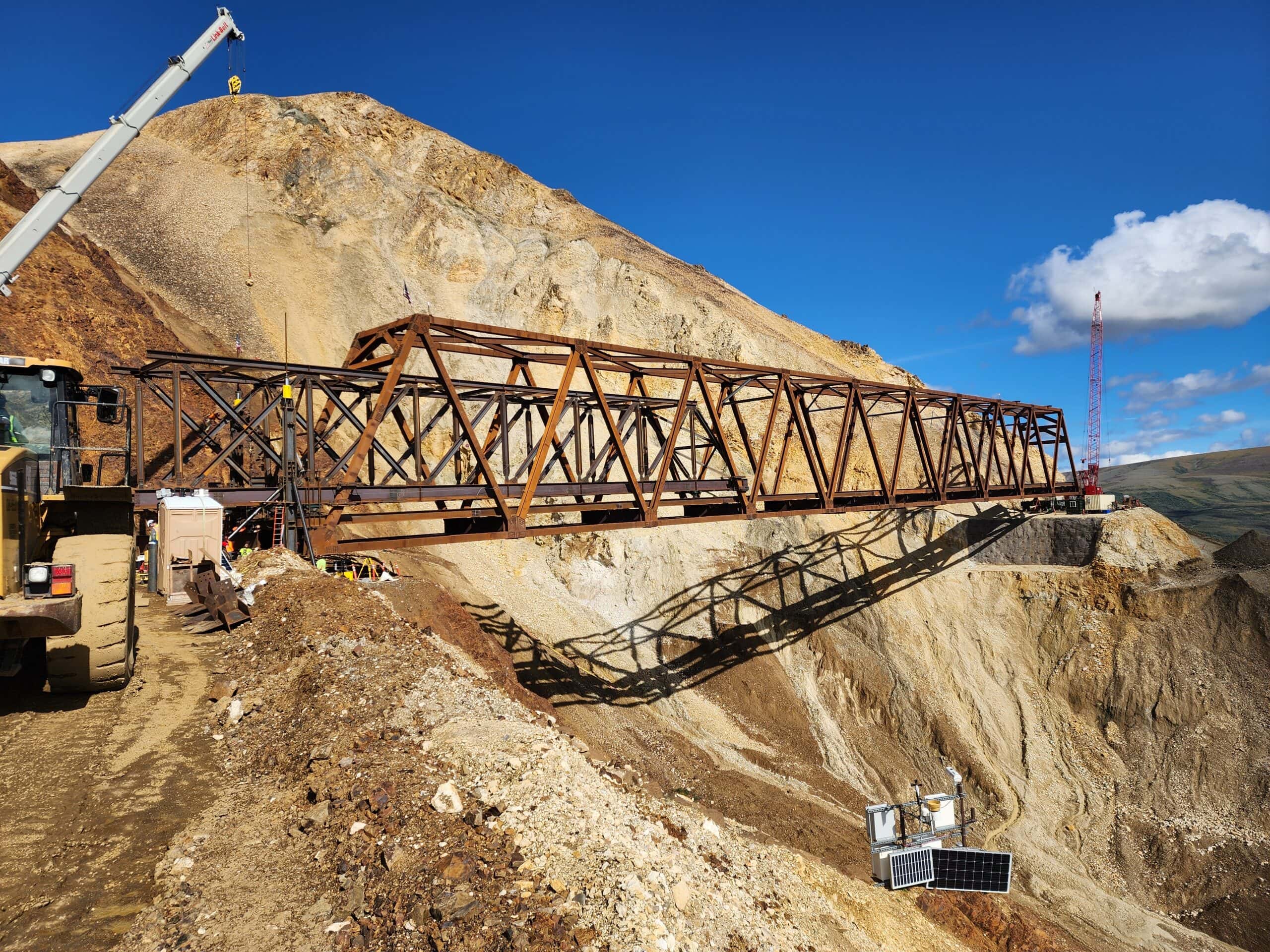
The Pretty Rocks Bridge is one of the most complex and technically demanding steel bridge projects undertaken in recent U.S. infrastructure. Located deep within Denali National Park, the site sits directly atop the Pretty Rocks rock glacier, an ice-rich permafrost body whose movement accelerated from inches per year to over 12 inches per day due to climate-driven thaw. This rapid ground deformation rendered the existing road unsafe and cut off public access to the western half of the park. A long-span bridging solution became the only viable way to restore access.
The bridge is a flagship example of how Integrated Design and Detailing (IDD) can compress schedule, de-risk construction and raise the quality bar on a complex steel truss bridge fabrication and erection. For DBM Vircon, it was the ultimate test of its integrated digital engineering capability: taking a 475-foot single-span weathering steel Warren truss, to be launched over an actively moving rock glacier in remote Alaska, from concept to fully detailed, fabrication-ready model in just five months.
PROJECT CHALLENGES
The Pretty Rocks Bridge was a particularly challenging project for several reasons:
THE SOLUTION
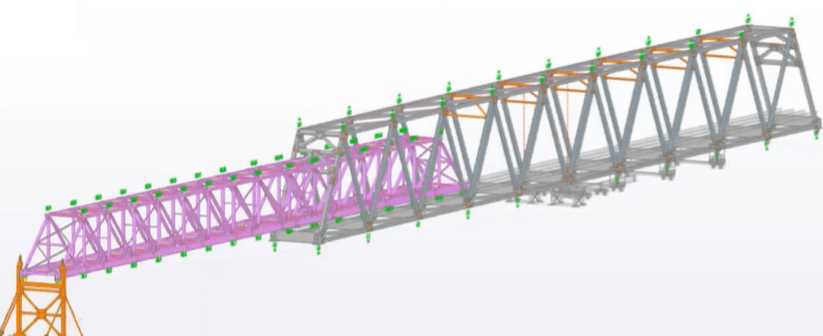
The selected design is a 475-ft single-span weathering steel Warren truss constructed on the east side of the landslide and launched across the unstable slope in a single controlled operation. The project faced extraordinary challenges, including an active landslide incapable of supporting falsework; a narrow mountain bench with virtually no laydown space; severe environmental restrictions; a remote supply chain; and an urgent need to compress the delivery schedule to reopen the park as quickly as possible.
To meet these constraints, the Federal Highway Administration developed a General Contractor delivery model with a highly integrated technical team. The project was delivered under a General Contractor / Construction Manager model, with Jacobs as lead designer, BGC Engineering as geotechnical engineer, Granite Construction as general contractor, KWH Constructors and Somerset Engineering as the steel erector and erection engineer, and DBM Vircon as the IDD partner and steel bridge detailer.
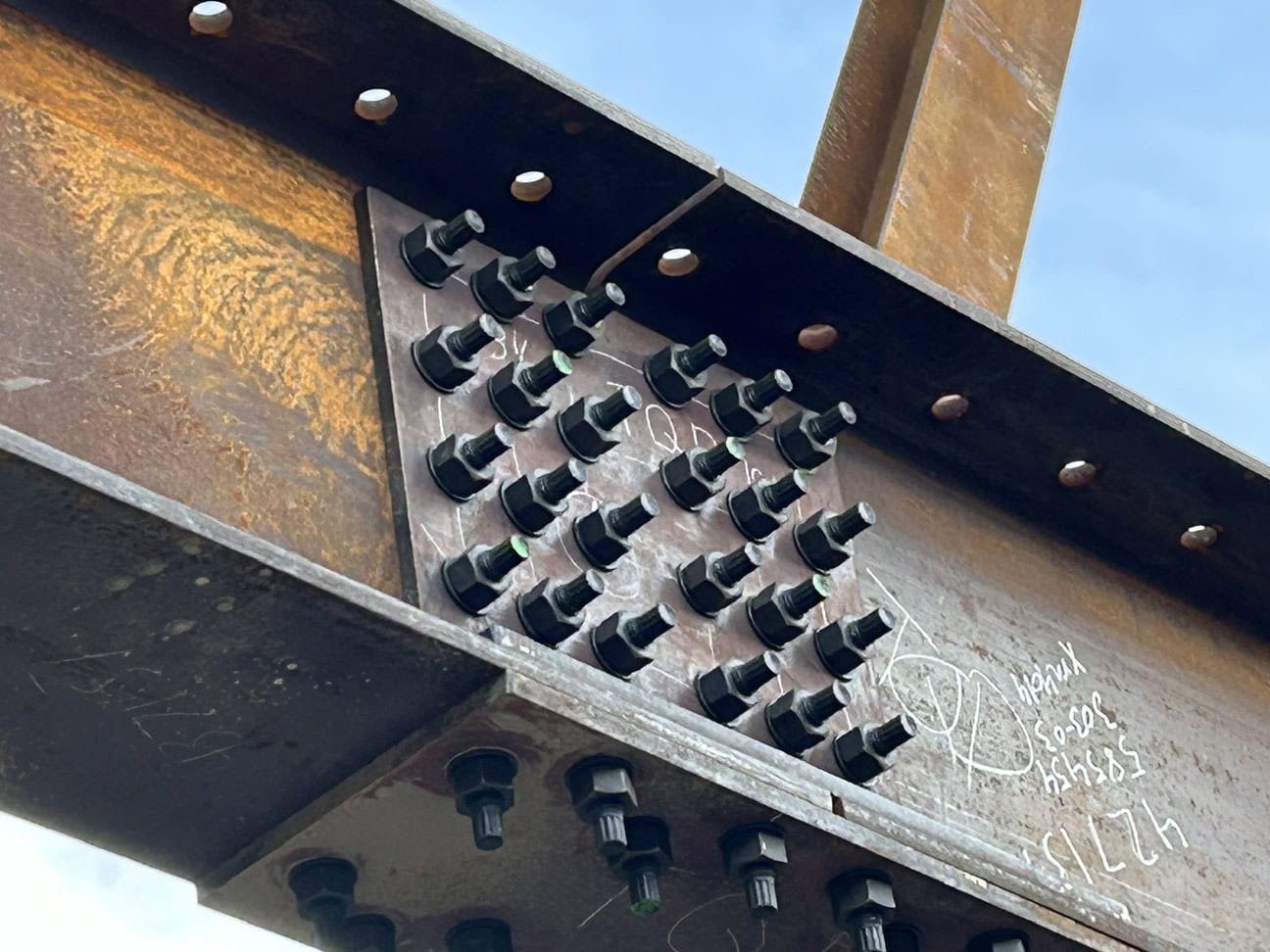
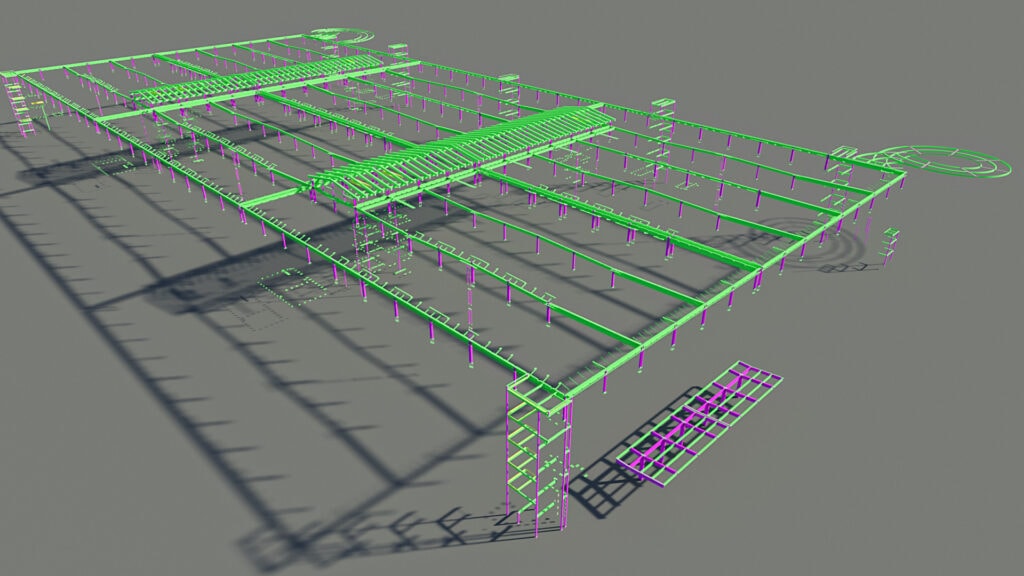
DBM Vircon’s fabrication-level Tekla model captured permanent works, temporary launching truss components, cambered and launched geometries, floorbeams, deck interfaces, and connection details to LOD 400. This early constructible detail enabled the project to issue Advance Bills of Materials and place steel procurement orders months earlier than possible under traditional workflows. The model also served as the primary coordination tool, enabling rapid Virtual Model Approval (VMA), real-time clash detection, and collaborative resolution of constructibility challenges.
The IDD approach proved critical to the project’s success. It reduced detailing and approval cycles by an estimated seven months, supported a highly complex incremental launch strategy, and delivered exceptional accuracy. This resulted in near-zero field rework on a 475-ft truss installed in one of the most inaccessible locations in North America. The digital model also guided fabrication, trial assembly, transport logistics, and field erection, ensuring the multidisciplinary team remained aligned throughout delivery.
OUTCOMES AND FUTURE IMPACT
In late 2025, the Pretty Rocks truss was successfully launched from the east abutment, landed on the west receiving tower and jacked into its final position. Deck installation and approach works were completed in 2026 and full public access to Denali’s interior is expected in 2027.
From DBM Vircon’s perspective, the project has delivered several clear outcomes:
For DBM Vircon, Pretty Rocks demonstrates that for the next generation of complex, high-risk steel bridge projects, Integrated Design and Detailing is not a “nice-to-have” but the critical delivery mechanism. By embedding BrIM experts directly into the design and construction team, and by elevating the 3D model to the central contractual and technical reference, DBM Vircon helped turn an almost unbuildable project into a constructible, climate-resilient bridge that will reconnect visitors to the heart of Denali for decades to come.